Advanced · Design and spatial systems
Composition study: a designed still life
Practice value mapping, directional analysis and memory reconstruction on a jug-and-bowl arrangement. This original diagram teaches a study method; it is not a reproduction or analysis of a historical master painting.
Interactive study plate
Make a tiny value map
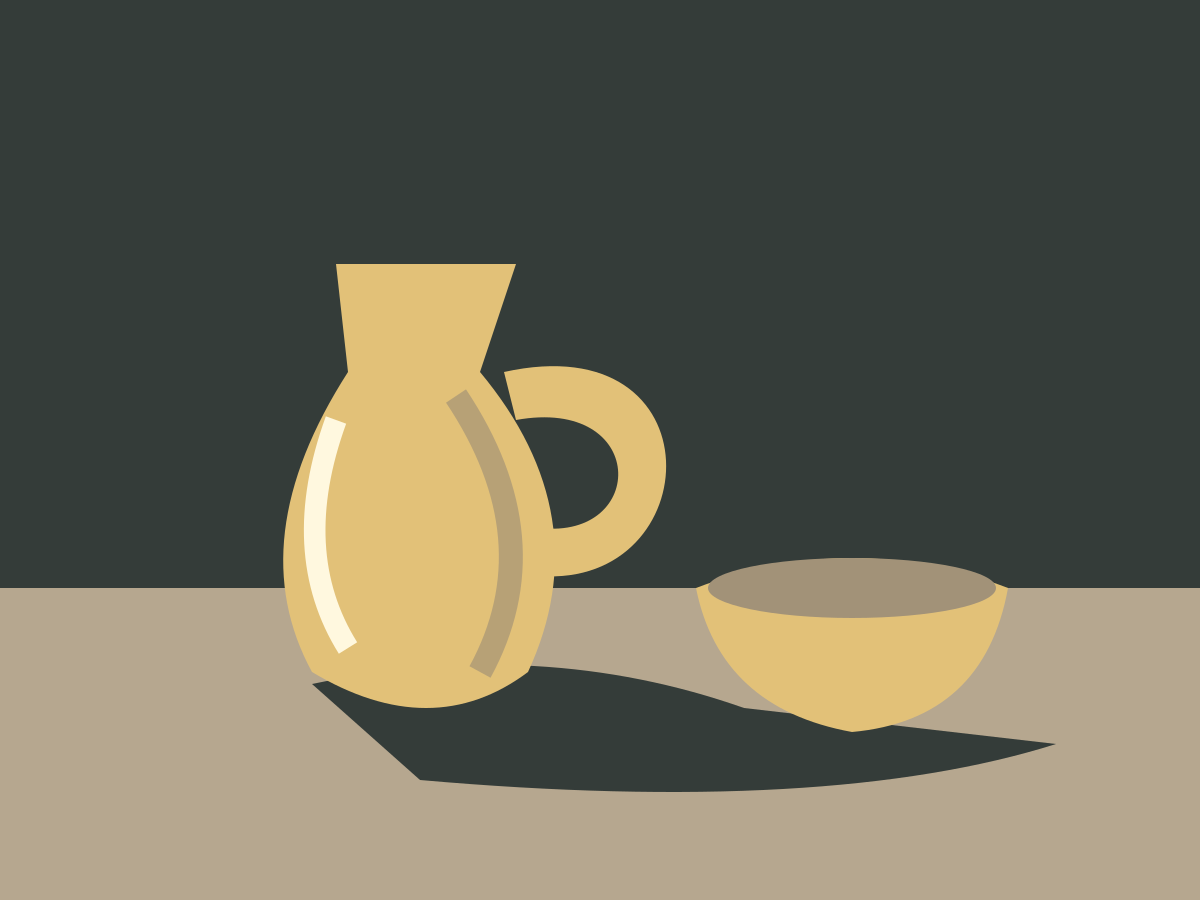
Look here: The dark background ends at the table edge, y = 49.
Observe the light jug on the left and low bowl on the right. On a 10 × 7.5 cm thumbnail, use three values: dark background and cast shadow, middle-value table, light vessels. Merge the jug highlight with its body; do not outline every reflection.
Reference image
Jug and bowl on a table — an original DrawGrid SVG illustration, authored in code for this lesson. Source: DrawGrid original vector lesson plates; no external artwork or stock image is used.
Rim, table and focal diagonal
The overlay uses the same frame coordinates as this reference. Switch each layer on to compare the indicated relationships.
Three-value demonstration
The identical jug, handle, bowl and cast shadow reduced to three flat values. Small highlights and the bowl opening are merged into their larger light family.
All steps for reading and practice
1. Make a tiny value map
Observe the light jug on the left and low bowl on the right. On a 10 × 7.5 cm thumbnail, use three values: dark background and cast shadow, middle-value table, light vessels. Merge the jug highlight with its body; do not outline every reflection.
Check: The jug and bowl should remain readable after small surface marks disappear.
2. Trace the main directions
Enable the guide. Compare the jug rim from (28, 22) to (43, 22) with the table edge at y = 49. The diagonal from the rim center to the bowl center links the tall left mass to the low right mass; it is an analytical connection, not a painted contour.
Check: Do not claim every edge belongs to the diagonal. It connects focal locations only.
3. Rank the visual weights
Mark the jug as primary: it is taller and larger than the bowl. The bowl is a smaller counterweight; the broad upper-right background stays quiet. Compare the jug handle opening with the surrounding dark background before drawing it.
Check: Giving the bowl equal height would change the hierarchy rather than copy this reference.
4. Rebuild from memory
Look for 20 seconds, then cover the screen with paper. Draw the table edge, jug envelope, bowl and joined cast shadow from memory. Reveal the plate and compare heights and spacing. Correct the table edge first if it drifted.
Check: Use your own paper for recall; this step does not generate a drawing for you.
5. Compare and annotate
Toggle Demonstration to compare the reference with its flat value reduction. The vessels stay in the same positions. The jug highlight and bowl opening disappear into the light family; the shadow stays joined beneath both vessels. Correct one large difference in your thumbnail and write why it matters.
Check: Self-check: three values, the same table height, a dominant jug and smaller bowl. Record a principle, not a claim about an unnamed masterwork.
Continue Section III