Exercise 08 · Difficulty: Intermediate · About 15 minutes
Mushroom study Grid Drawing Practice
Skills: Curved planes · Width to height
Compare a broad, low cap with a narrower stem. The visible underside is a separate curved plane that shows how the stem sits behind the cap.
Practice Materials
Use a square frame with 4 × 4 matching cells. Draw on paper while keeping the reference beside you.
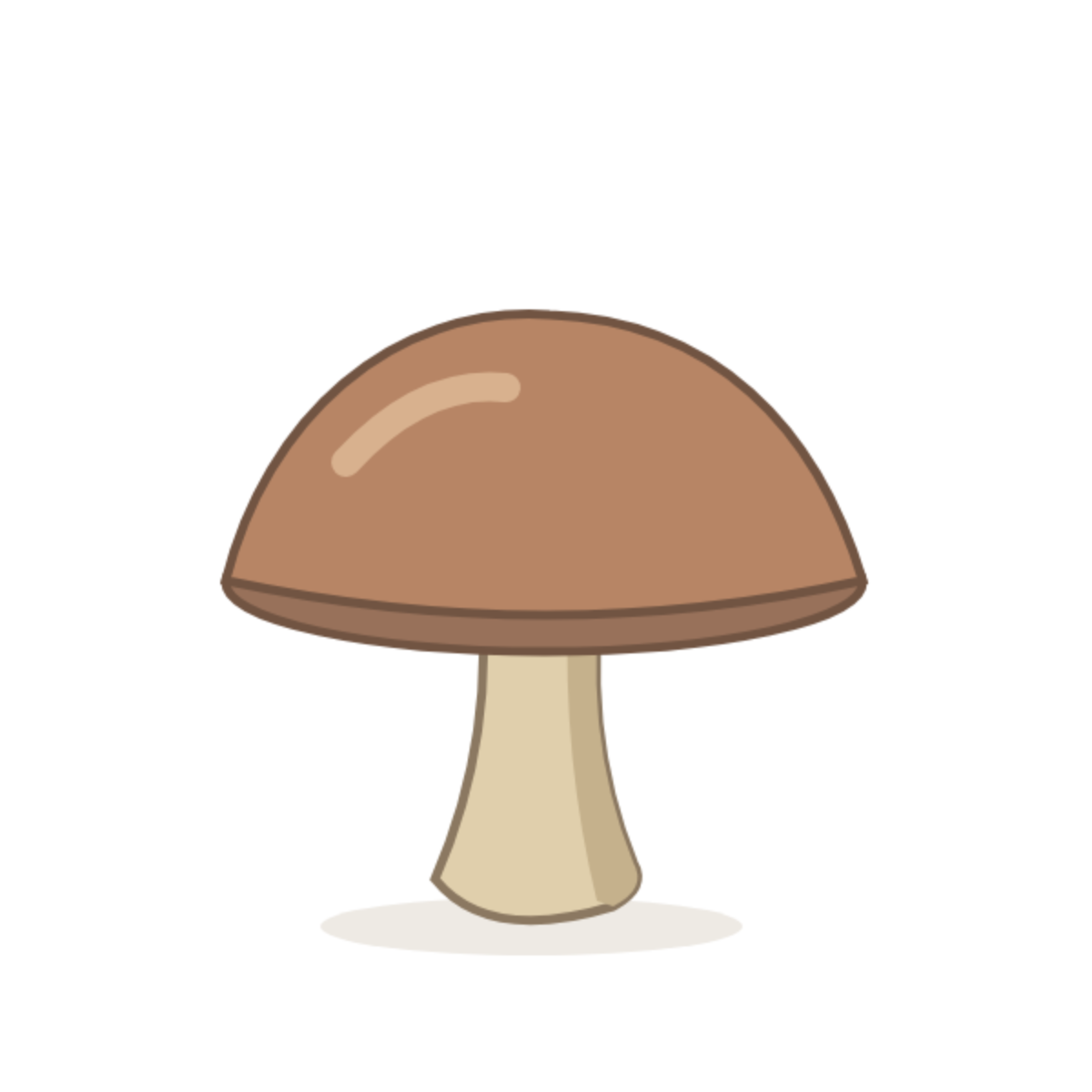
Reference Image
Observe the whole silhouette before using the grid.
Download reference PNGGrid Reference
Match the positions where curves cross cell edges.
Blank Grid
Keep the same frame proportions on your paper.
The PDF pairs a labeled reference with a matching blank grid. Print in landscape at actual size. Use the worksheet editor to change grid density, choose paper size or export a PNG.
01 — Measure the Cap Before the Stem
Mark the cap’s far left and right points and the top of its dome. Its width is much greater than the height of the dome. Compare those spans before drawing an arch.
Locate the cap’s lower edge across the stem. Sketch a low envelope through the outer marks, keeping the left and right slopes rounded rather than turning the cap into a triangle.
02 — Show a Thin Underside Band
Look just beneath the cap. The dark underside extends below the front edge as a shallow curved band. Keep it visible instead of closing the cap with a flat horizontal line.
Compare the band depth near the center with the much larger dome above. Its upper boundary follows the cap edge; its lower boundary curves behind the stem.
03 — Bring the Stem Out from Behind the Cap
Place the stem’s two upper sides under the cap, leaving their hidden origins untraced. Follow the left side downward as it bends out toward the base.
The lower stem widens and has an uneven rounded bottom. Compare both side curves against the grid rather than making a straight cylinder. Separate the pale ground shadow from the base.
04 — Check Your Drawing
Compare the whole drawing before refining individual cells. Use these checks to locate the largest mismatch.
Is the cap too steep?
Compare dome height with its long width. Lower the top mark before flattening the side slopes.
Has the underside disappeared?
Leave a shallow dark band below the cap edge. Keep the band narrow so it does not become a second cap.
Does the stem pass through the cap?
Stop its visible sides at the underside. Remove hidden lines above that meeting point.
Practice This Exercise
Make a second attempt on paper. Choose a gridded reference or remove the grid to test the relationships you have learned.
Compare cap width with stem height. Keep the underside visible as a shallow band.
The PDFs use the standard grid. For the challenge, draw a square frame on plain paper. Open the editor if you want fewer cells for an intermediate step.
Edit worksheetWhat You Practiced
- Width-to-height comparison keeps the dome low.
- Two curved boundaries describe the underside plane.
- Hidden upper edges attach the stem behind the cap.
Keep both attempts and note one correction: what moved, and which comparison showed you where it belonged?
Learn the Technique
Continue Your Practice
Reference: original DrawGrid illustration. Orange guides describe this reference and should be drawn lightly, then erased. Material source record