Exercise 04 · Difficulty: Beginner · About 15 minutes
Lemon study Grid Drawing Practice
Skills: Axis · Contour · Asymmetry
Study a low, wide form with two unequal ends. The lemon trains you to notice a small tilt and changing curvature without relying on a symmetrical oval.
Practice Materials
Use a square frame with 4 × 4 matching cells. Draw on paper while keeping the reference beside you.
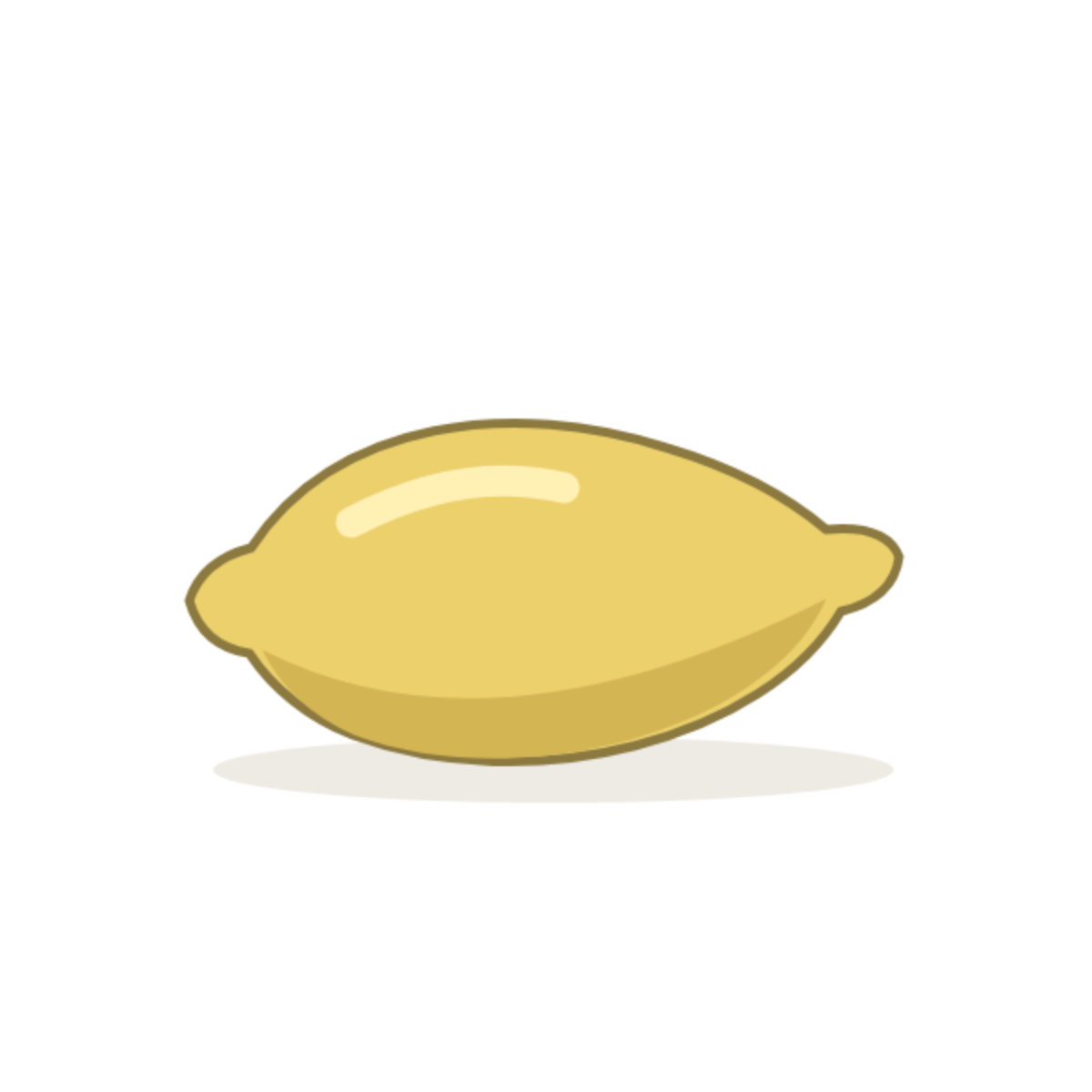
Reference Image
Observe the whole silhouette before using the grid.
Download reference PNGGrid Reference
Match the positions where curves cross cell edges.
Blank Grid
Keep the same frame proportions on your paper.
The PDF pairs a labeled reference with a matching blank grid. Print in landscape at actual size. Use the worksheet editor to change grid density, choose paper size or export a PNG.
01 — Join the Two Tips with an Axis
Locate the far left and far right tips before marking the top and bottom. The right tip is a little higher than the left, so the long axis rises gently across the page.
Compare the large horizontal span with the much smaller vertical span. The axis is a measuring line, not a visible seam to include in the finished drawing.
02 — Compare the Upper and Lower Arcs
Mark the broad middle above and below the axis. Follow the upper arc into the right shoulder, noticing where the curve becomes flatter.
Draw the lower contour independently. It is not a reflection of the top. Use the distances from the axis to compare how much fullness belongs on each side.
03 — Shape Each Tip, Then Group the Shadow
The tips grow out of the shoulders through short changes of direction. Keep the left end fuller and compare the small bulge at the right. Avoid adding identical pointed triangles.
Once both ends join the middle convincingly, draw the lower shadow as a connected band. Skip peel texture for this study so the long silhouette stays easy to judge.
04 — Check Your Drawing
Compare the whole drawing before refining individual cells. Use these checks to locate the largest mismatch.
Does the lemon look perfectly horizontal?
Recheck the tip heights against the grid. A slight rise is enough; do not exaggerate it into a diagonal.
Are both tips identical?
Compare how each tip joins its shoulder. The two turns differ in length and fullness.
Is it too round?
Compare total width against body height before adding tone. Reduce the height if the long form has become an oval fruit.
Practice This Exercise
Make a second attempt on paper. Choose a gridded reference or remove the grid to test the relationships you have learned.
Locate both lemon tips. Compare the upper and lower curves before shading.
The PDFs use the standard grid. For the challenge, draw a square frame on plain paper. Open the editor if you want fewer cells for an intermediate step.
Edit worksheetWhat You Practiced
- An axis makes a small tilt visible.
- Upper and lower arcs carry different amounts of fullness.
- Unequal tips belong to the contour rather than separate triangles.
Keep both attempts and note one correction: what moved, and which comparison showed you where it belonged?
Learn the Technique
Continue Your Practice
Reference: original DrawGrid illustration. Orange guides describe this reference and should be drawn lightly, then erased. Material source record